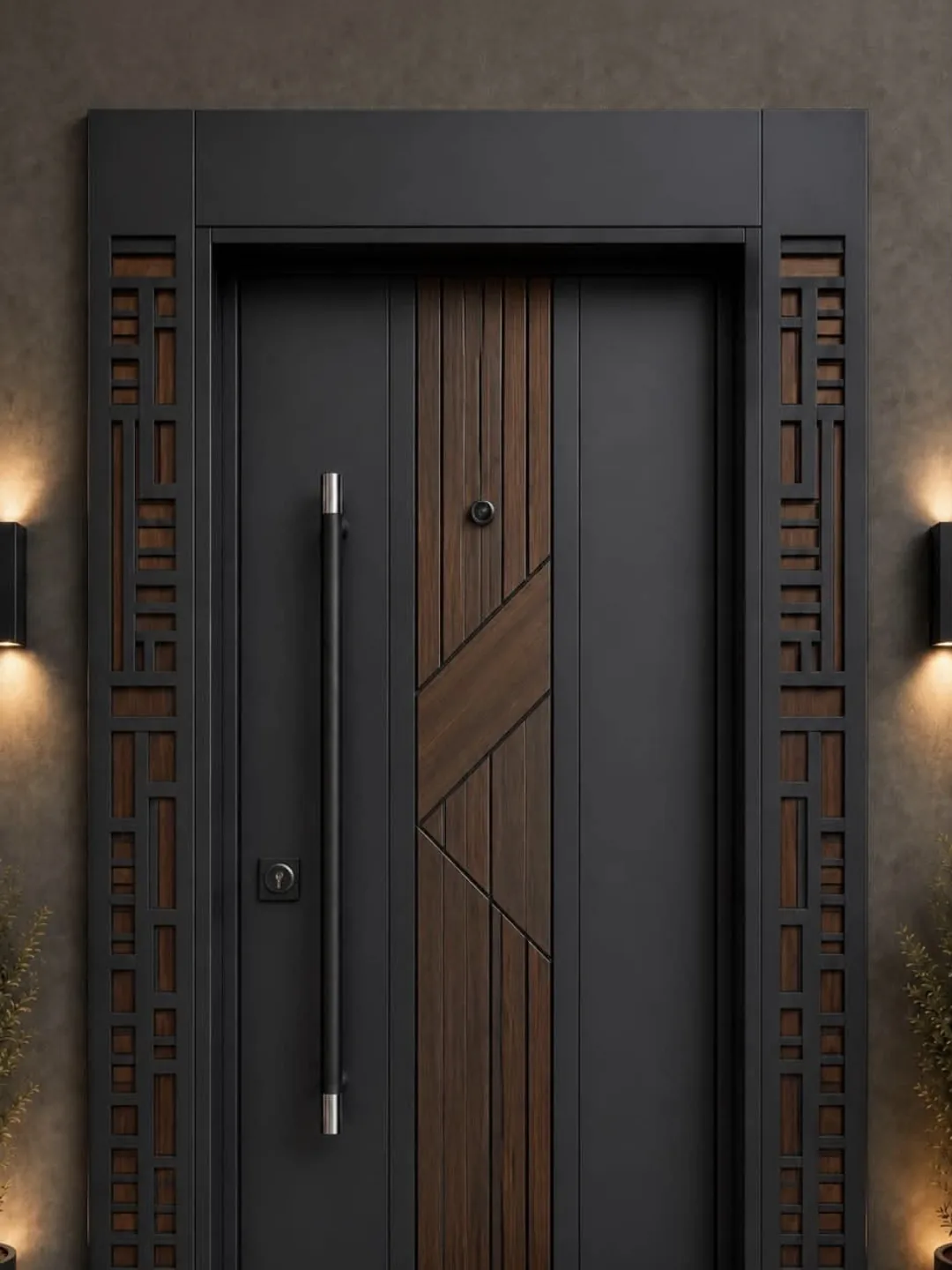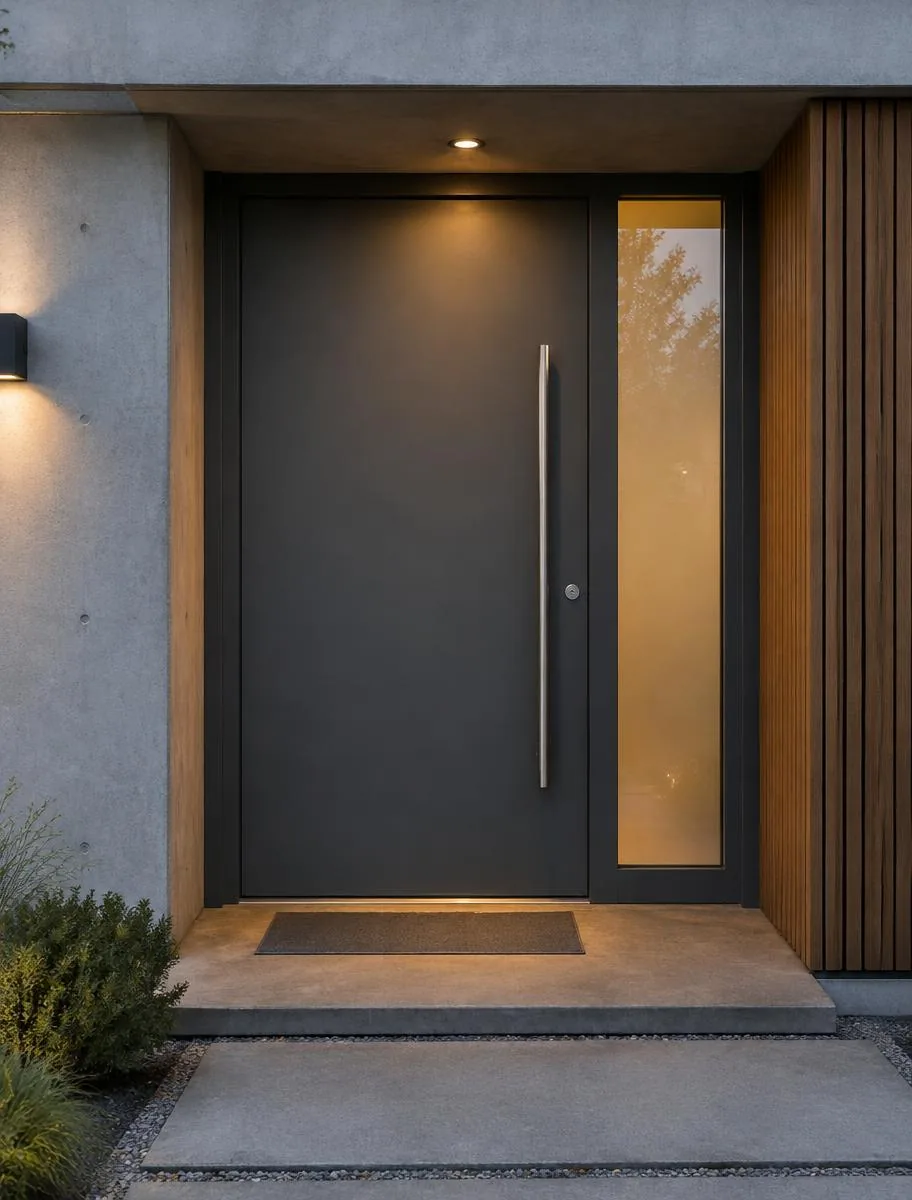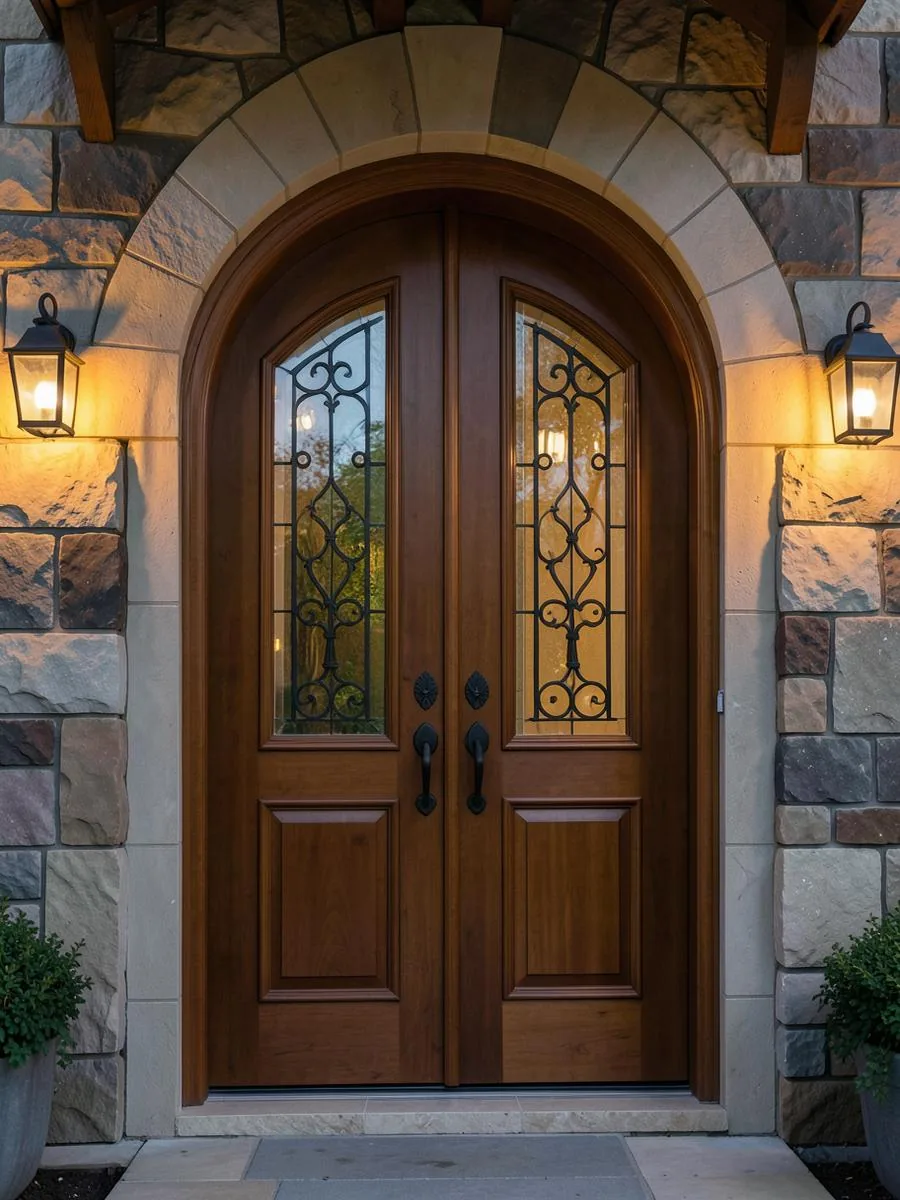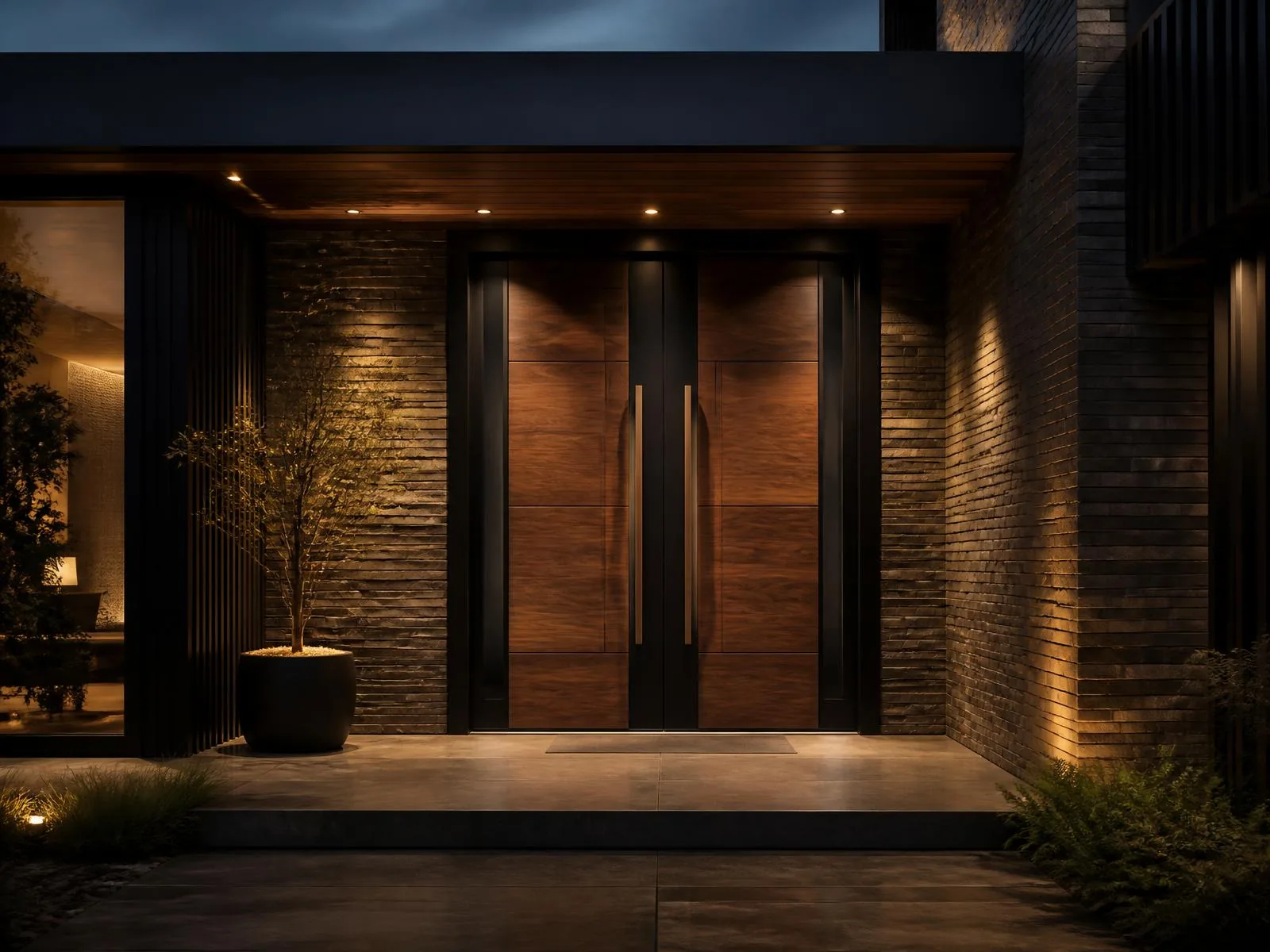
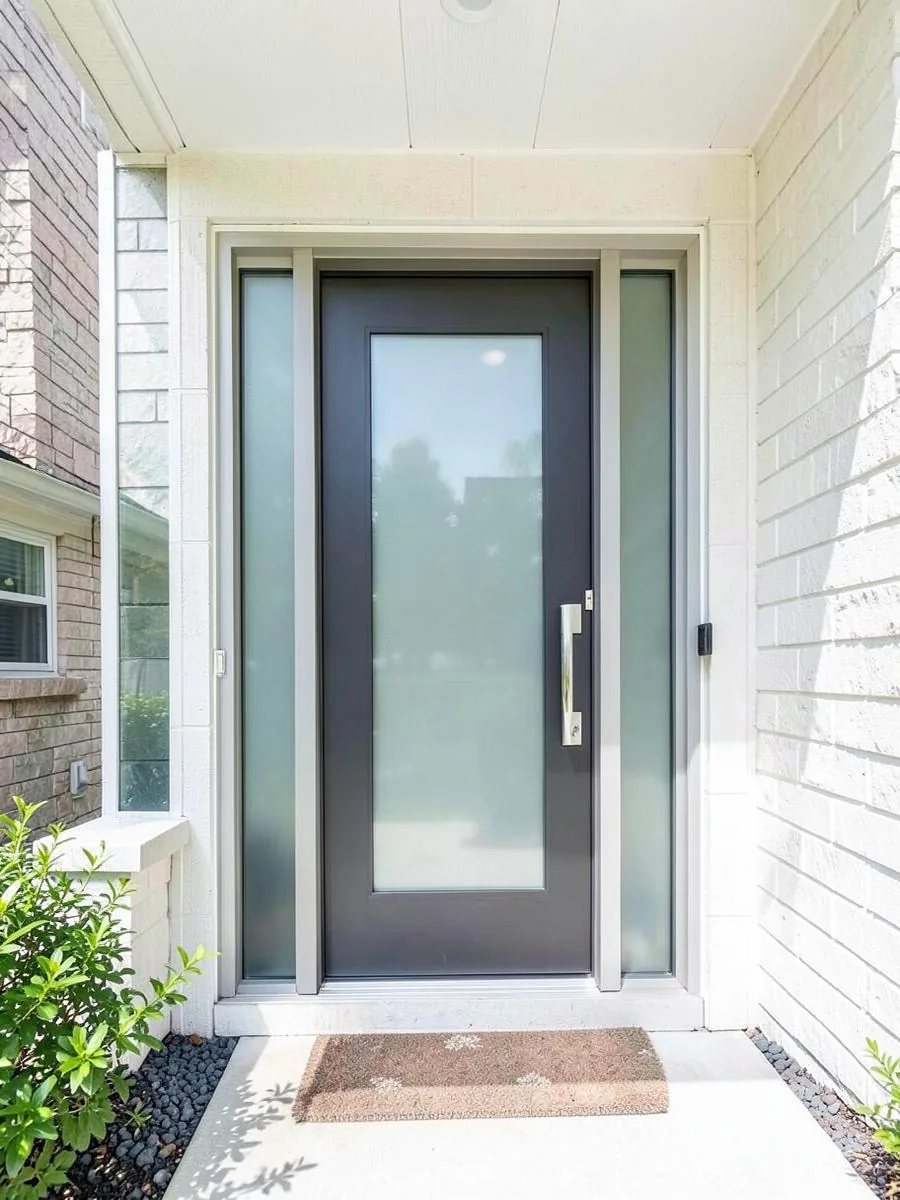
Choose a colour against your actual façade and confirm it on a suitable sample in changing light. Coordinate the frame and hardware at the same time. Door Depot paints and stains in its own studio at 4031 Chesswood Dr, so discuss the material, surface and finish as one specification rather than separate decisions.
Real door models from our 2026 catalogue
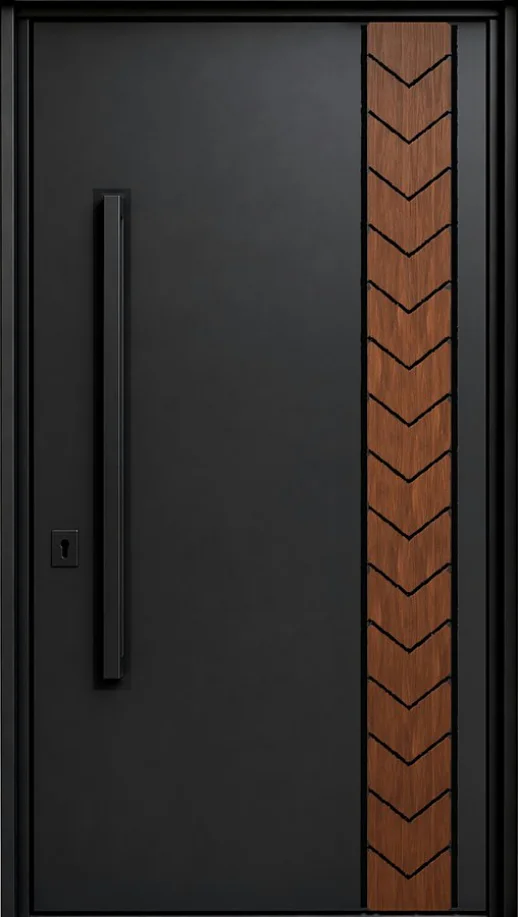
Photos from the Matte black & walnut collections. Tap a model for its printed sizes and a preliminary price.
See every Door Depot door model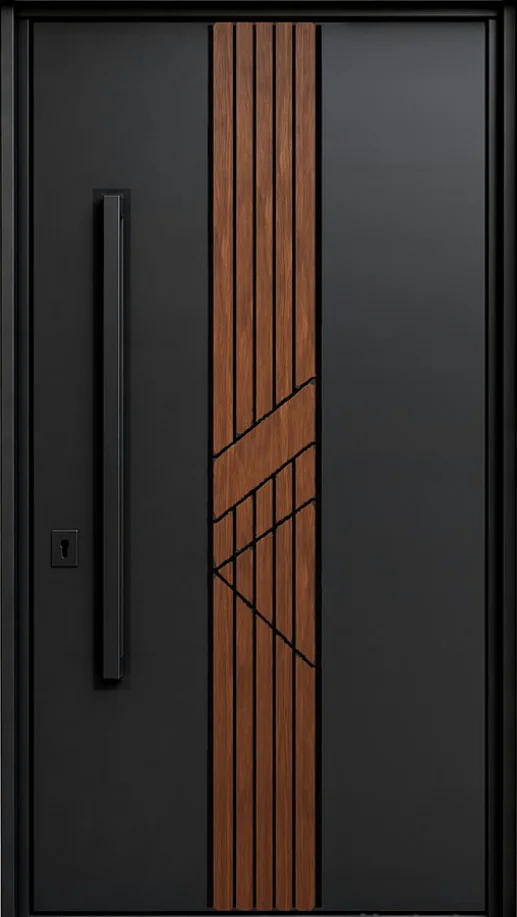
Red and orange Toronto brick: balance warmth
Many Toronto homes have red or orange brick with enough variation to contain several possible colour cues. Look closely at the mortar, darker fired edges and any stone lintels before picking a swatch. Black and charcoal often give the entrance a clear outline, while navy or deep green can introduce colour without competing with the brick’s warmth. The right undertone matters more than the name on the sample.
Oxblood or burgundy can create a rich, related palette, but test it carefully so the door does not disappear into similarly coloured masonry. Walnut or mahogany-toned stain can also complement warm brick when there is enough tonal separation. If a colour feels wrong, check whether the conflict is with the brick itself or with the cooler white of existing windows and trim. Avoid using a heavily filtered house photograph as the only colour reference.
Buff brick and grey stone need different comparisons
Buff or yellow brick often works with deep green, navy and charcoal, especially when these colours connect to the roof or other dark details. A warm white can feel quieter, but compare it against the mortar rather than assuming every white will harmonize. Some cool whites can look stark beside creamy brick. Natural wood stains can add warmth, provided the tone does not look overly orange against the masonry.
Grey stone may be blue-grey, brown-grey or mixed, so begin by identifying its dominant undertone. Black can give a crisp boundary, navy can echo cooler stone and walnut tones can soften a largely mineral façade. Charcoal is not a single neutral: a sample that looks balanced indoors may read blue or green outside. Place candidate finishes beside the stone and the frame colour before deciding which element should have the strongest contrast.
White siding, grey siding and dark modern cladding
White or grey siding leaves room for a distinct door colour, but the roof and window frames still set limits. Navy, deep green, burgundy and black are classic directions worth testing. Warm whites offer a more restrained entrance when you want the architectural shape and glass to lead. With grey siding, decide whether you want a soft tonal arrangement or a noticeably darker focal point.
Dark modern cladding can support a near-monochrome black entrance, or a wood-toned contrast that makes the entry easier to read. Door Depot’s Signature collection · Matte black & walnut pairs a matte black slab with walnut-stained inlays. These original designs are built to order, with single-door arrangements, one or two sidelights and an optional matching transom. Use the collection as a starting point for proportions and contrast, not as proof that every black-and-wood inspiration image is a completed Door Depot project.
Choose classic colours by contrast, not fashion
Black, charcoal, navy, deep green and oxblood or burgundy have broad design possibilities because each can read as a strong anchor rather than a fleeting accent. They are not interchangeable. Navy can look almost black in shade, while burgundy may appear redder in direct light. Decide how much of that change you enjoy before using it across a large slab and matching sidelites.
Natural wood stains such as walnut and mahogany tones bring another kind of variation: grain and surface texture change the appearance as well as light. Warm whites can suit a quieter entrance, especially when repeated thoughtfully in trim, but need testing beside existing white windows. Narrow the choice to a small group, then compare actual samples. A large selection of unrelated swatches can make the decision harder without revealing what works with your house.
Matte, gloss and sun exposure
Matte finishes tend to give a softer visual effect, while glossier finishes reflect more light and can make surface contours more noticeable. The practical finish choice depends on the available coating system and the surface being finished. Do not assume the same sheen is suitable for every slab or that a fashionable matte appearance removes the need for cleaning and care.
Follow the supplier’s guidance on dark colours in direct sun. A dark finish can absorb more solar heat, and the appropriate colour and coating depend on the selected product and exposure. Show Oscar whether the entrance is sheltered or receives strong afternoon light. View samples outside in shade and sun where possible, and ask for the selected finish’s care instructions. Screen renderings and small indoor chips are useful for narrowing choices, not reliable substitutes for a finish discussion.
Painted versus stained: specify the actual surface
Smooth fiberglass is made for paint — any colour from our paint range or a custom match. Steel is factory white or custom painted to any colour and has a polyurethane foam core. Stain-grade woodgrain fiberglass takes stain. These are different finish routes, so confirm the surface first rather than choosing a stain effect and assuming it can be applied to any door.
Solid wood offers natural grain and its own finish-care considerations. Ask how the proposed stain will look on the selected material and how exposure affects maintenance. Door Depot cuts, builds, paints and stains in-house in North York; paint and stain work is done in our own studio at 4031 Chesswood Dr. Bring a physical reference for a custom match when possible and discuss the sample approval process. A colour name alone may not identify an exact finish across different products or manufacturers.
Coordinate hardware, frame and heritage requirements
Decide whether the frame should match the slab, relate to the windows or form a quieter border. Hardware should be considered alongside both, including the hinges and any visible lock components. A long dark pull may blend into black paint, while a contrasting metal finish can become a deliberate focal point. Look at glass texture too: reflections and decorative details can change how busy the entrance feels.
If the home is designated or in a Heritage Conservation District, check the City’s heritage guidance before assuming the colour or replacement design is unrestricted. Routine painting generally does not require a heritage permit in an HCD, but a door replacement can involve different changes. Confirm the requirements for your property rather than applying a general maintenance exception to the whole project. Book a showroom visit online to compare finish, glass and hardware samples together before approving the final specification.
Frequently asked questions
Is black the safest choice for every brick house?
No. Black can work well, but the roof, windows, masonry undertones and sunlight all affect the result. Compare it with charcoal, navy or a wood tone against the actual façade instead of treating black as a universal answer.
Can I order a custom paint match?
Smooth fiberglass can be painted any colour from our paint range or a custom match, and steel can be custom painted. Discuss the actual reference and sample approval with Oscar so the finish is specified rather than inferred from a screen image.
Can a smooth fiberglass door be stained like wood?
Choose stain-grade woodgrain fiberglass for a stained appearance. Smooth fiberglass is made for paint. The texture and intended finish need to be selected together; a paint-ready surface is not the same product as a stain-grade woodgrain surface.
Should sidelites always match the door colour?
Not necessarily. Matching can unify the entrance, while a coordinated frame colour may connect it to nearby windows. Consider the complete opening, glass and trim rather than deciding from a cropped image of the slab alone.
Will matte black work in full sun?
Check the selected supplier’s guidance on dark colours in direct sun before choosing it. Exposure and coating suitability matter. A design preference does not override product-specific finish requirements or care instructions.
Where can I compare stain and hardware samples?
Book a one-on-one showroom visit online with Oscar at 4019 Chesswood Dr in North York. The showroom has wood, stain and finish samples alongside handles, locks, hinges and glass, allowing you to compare the coordinated specification.