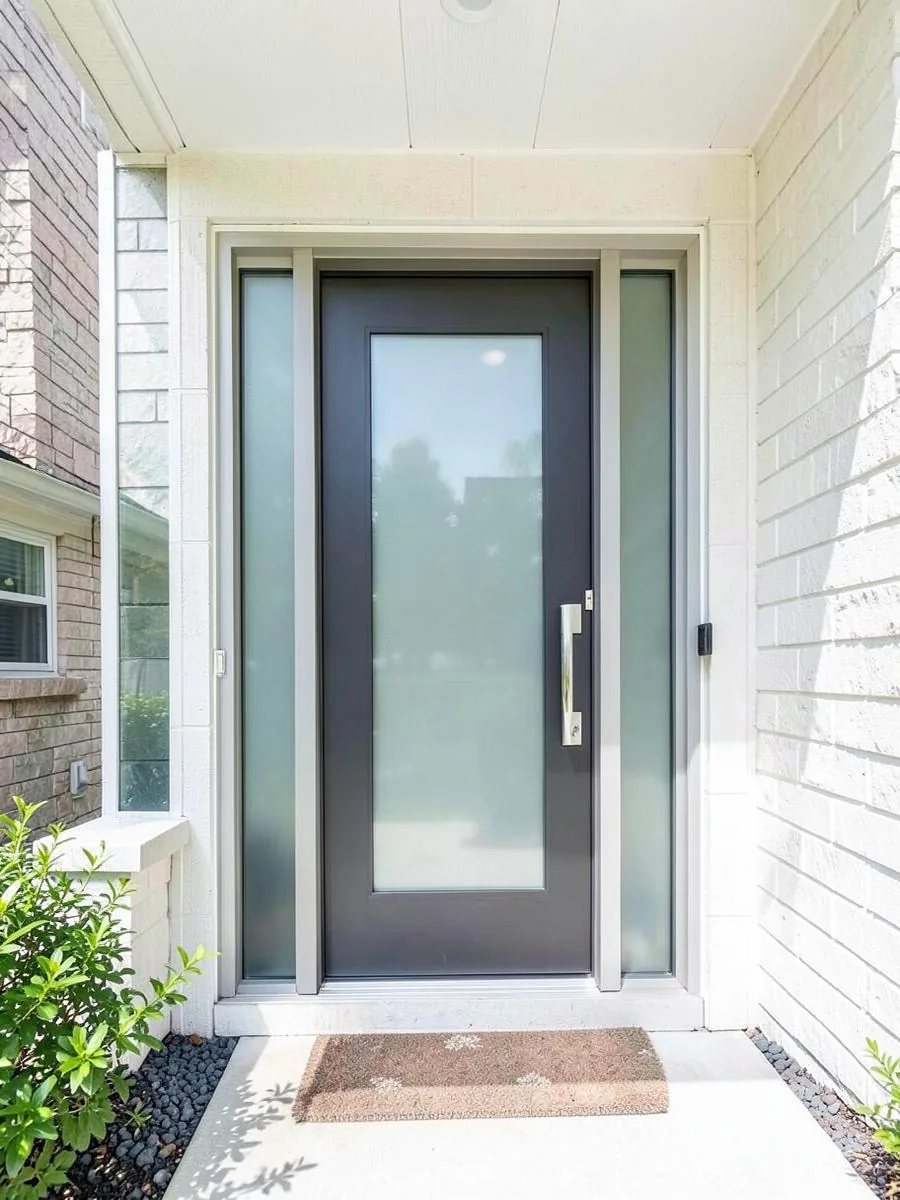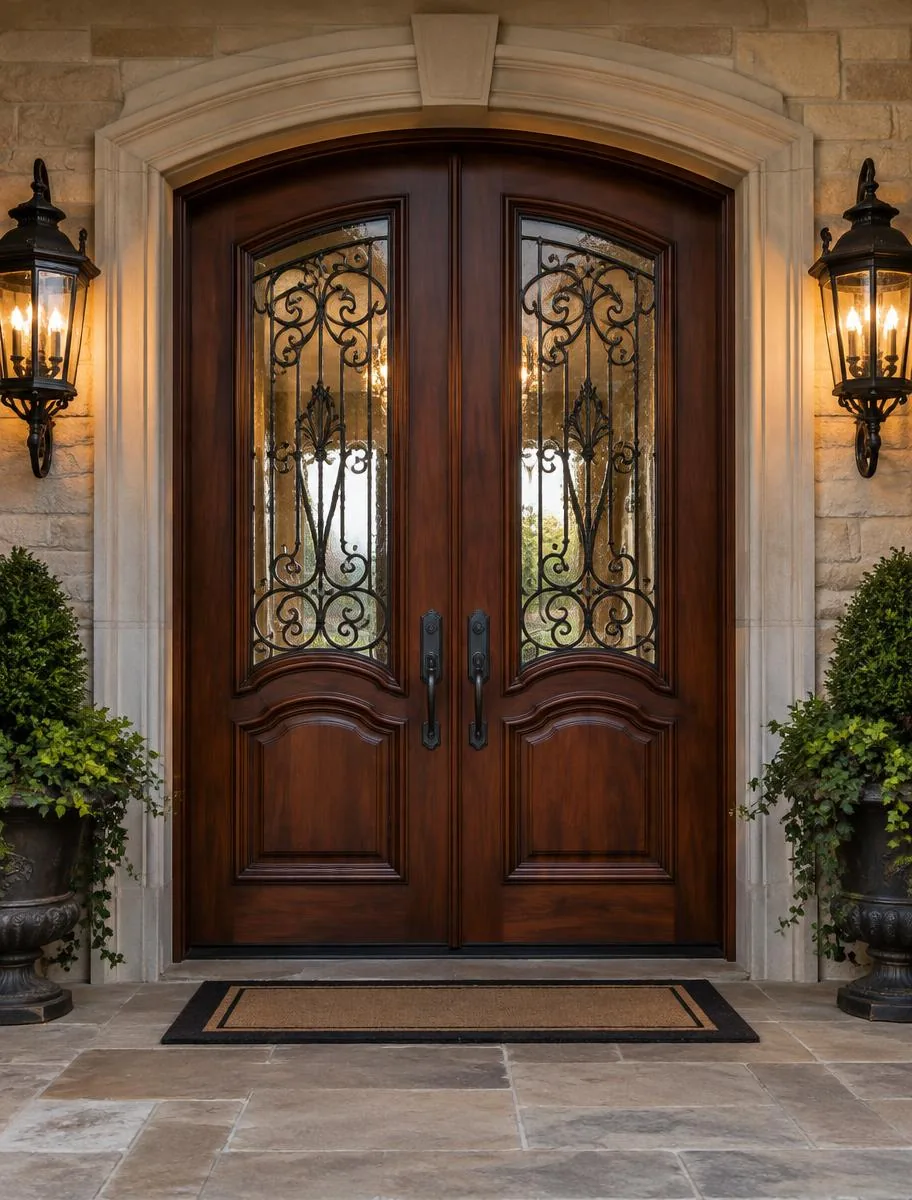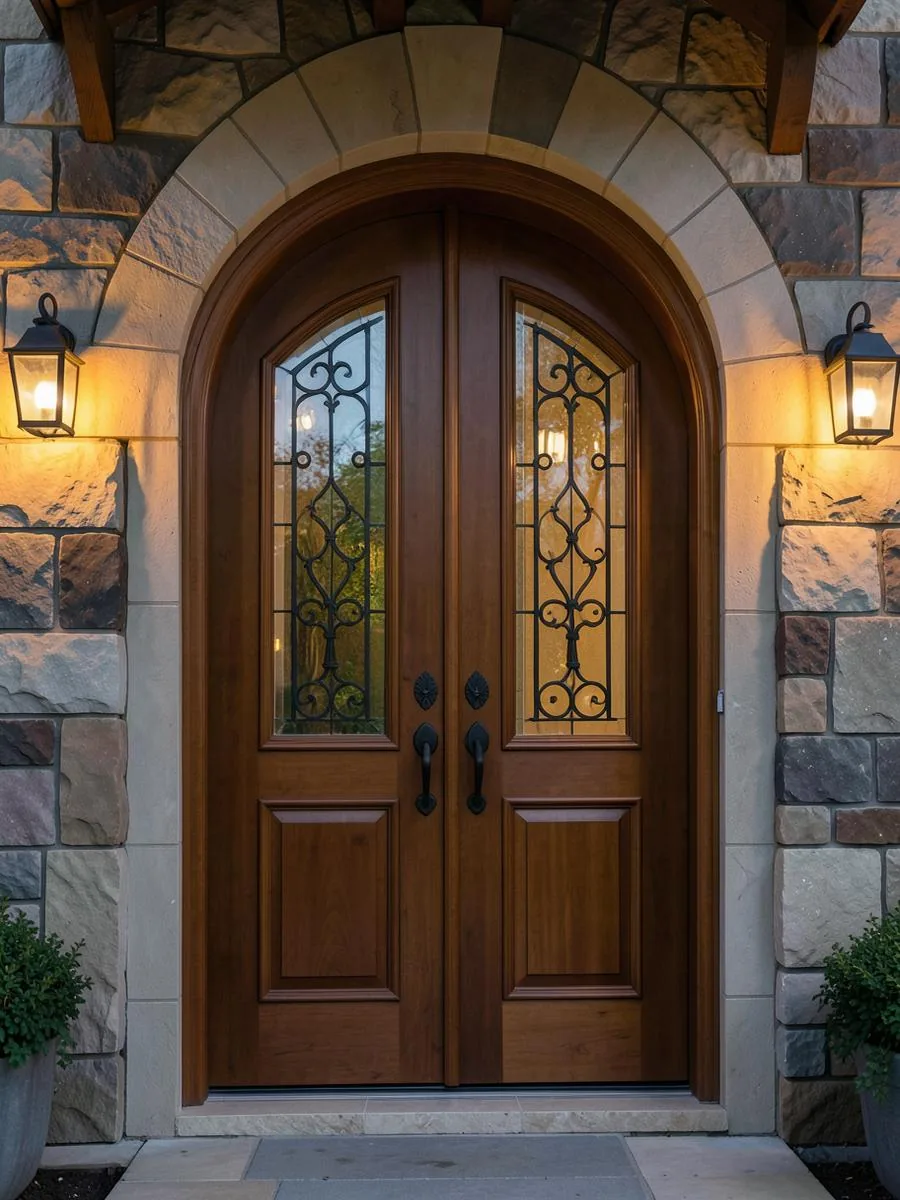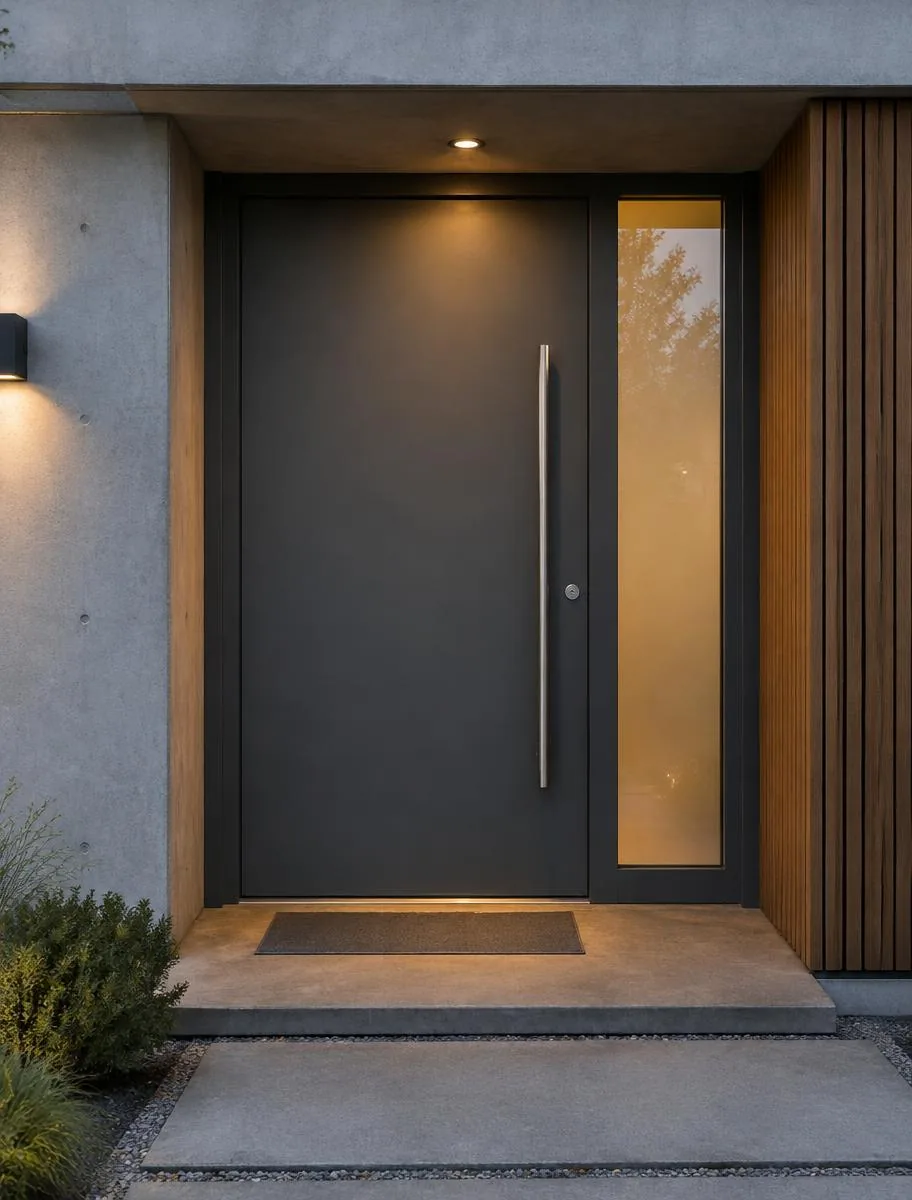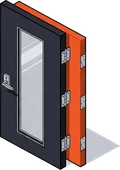
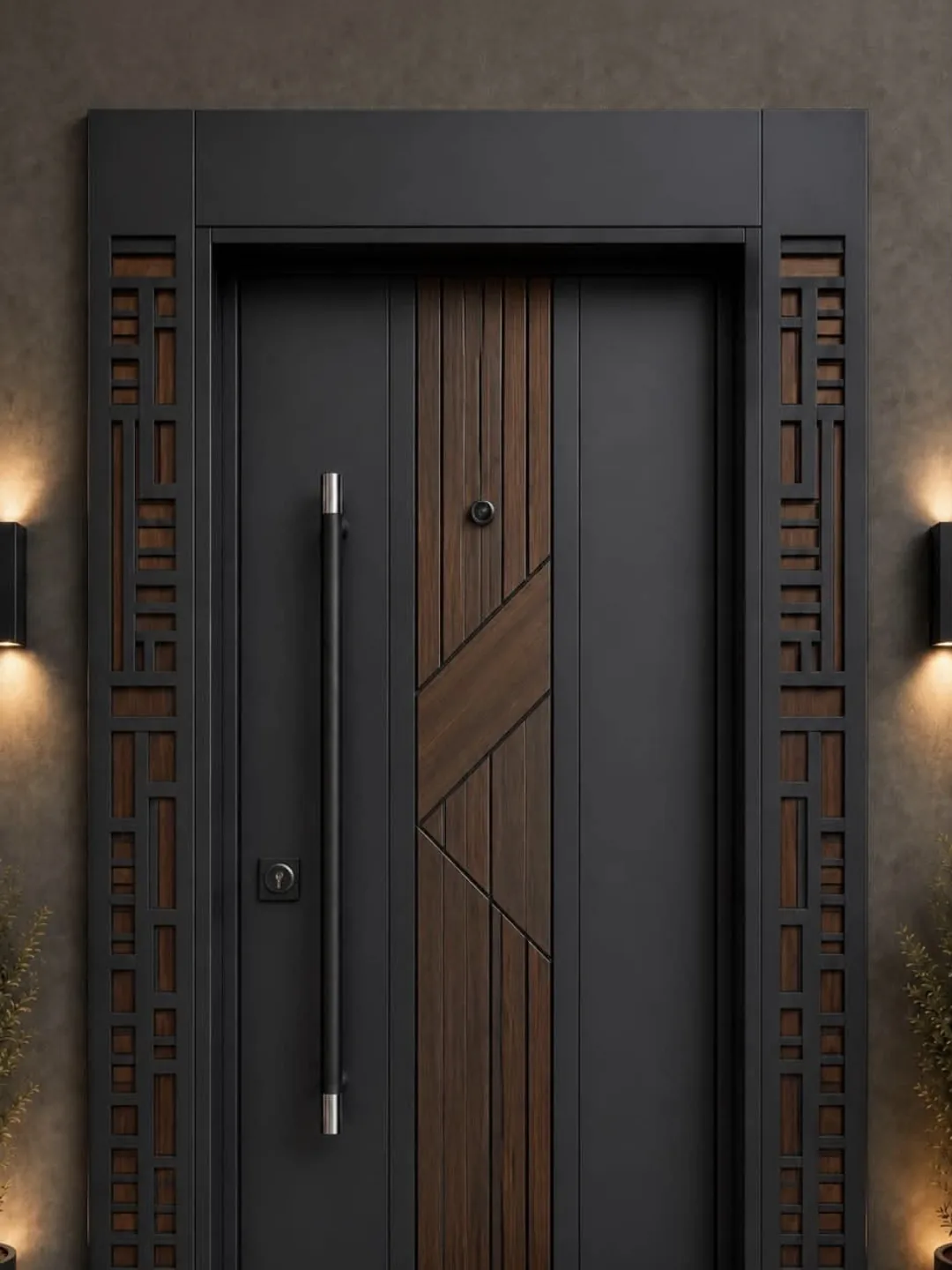
Test the actual glass with light behind it and a person at realistic distances. Decide separately how much daylight, visible movement and recognisable detail you are comfortable sharing through each part of the entrance.
Define the view you want to interrupt
Begin inside the house. Can someone approaching the door see a staircase, a home office, a bathroom doorway or the place where you leave bags and keys? A need to conceal recognisable faces is different from a need to obscure the entire hallway. Make a short list of the views that concern you before choosing a texture or decorative pattern.
Then stand at the public approach, the porch and any path beside a sidelite. Note changes in ground level and viewing angle. A high window can hide a direct view from the pavement yet reveal more from a raised landing. Privacy should be evaluated along the routes people actually use, not only from a straight-on photograph of the front elevation.
Separate daylight from visible detail
Glass can transmit useful light while making objects harder to recognise, but not every obscuring treatment has the same effect. Some textures blur outlines; others leave areas where details remain visible. A bright-looking sample does not tell you exactly what will be distinguishable through it. Ask to compare the actual options rather than treating “decorative” and “private” as interchangeable descriptions.
Door Depot’s decorative glass names include KALLIMA, GLACIER, BISTRO, Chatham and Satine. Contemporary glazing names include Satin, Rain, Matrix and Quartz. These are catalogue identifiers, not a privacy ranking. Do not infer a numerical rating or a particular obscuring treatment from a name alone. Confirm the construction and appearance of the selected glass with the sample or specification offered for your order.
Repeat the comparison with the lighting reversed
A doorway may appear private during the day because the exterior is brighter than the hall. After dark, interior lighting can make people or movement more visible from outside. Reflections can also disguise transparency in a showroom or photograph. When comparing a sample, ask what changes when the area behind the glass becomes the brighter side of the assembly.
Use a person or a recognisable object behind the sample instead of judging only its surface. Try a close position and a position farther back, and look from more than one angle. This is not a certified test, but it makes the trade-offs tangible. If seeing a silhouette would still feel intrusive, say so explicitly; obscuring facial detail alone may not meet your privacy goal.
Choose glass placement before maximising glass area
A narrow vertical lite, a high panel and a large central pane illuminate the entrance differently and expose different parts of the room. Consider where someone standing on the porch will look through each one. A relatively small pane at eye level can create an unwanted direct sightline even when the rest of the slab is solid.
Sidelites and transoms need their own review. A transom can introduce light above the usual viewing height, but stairs and neighbouring levels may change the angle. A sidelite can reveal the area beside the door that the slab itself conceals. Sketch every glazed area on the proposed entrance and mark which interior views each one opens up, including any glass in a second door leaf.
Inspect the clear spaces within decorative patterns
Decorative glazing may combine differently textured pieces, clear sections and dividing details. Assess the least obscured areas, not just the overall impression. Hold the sample where eye level would fall and check whether repeated clear openings align into a useful sightline. A complex pattern can be visually busy while still allowing someone nearby to distinguish activity in the hall.
Ask whether the drawing represents the exact glass size you are ordering. A pattern adapted to a different opening may place its clear or textured portions differently. If you are combining a door insert with sidelites, confirm the designs for each component. Do not rely on a small sample to establish how the whole entrance will look or how every pane will affect privacy.
Plan any additional privacy control deliberately
Some households want an adjustable covering for evenings rather than a permanently obscured view. Consider how a covering would attach, operate and fit around handles before deciding on the glass. For garden door glass, the catalogue lists Blinds between glass in white and satin grey. Confirm the exact configuration and operating details instead of assuming that option is available in every entrance design.
Do not add adhesive film to a glazed door without checking the glass supplier’s instructions. Films and other additions can affect glass conditions or product care requirements. If total visual separation is essential, compare less glazing or a solid area in the critical sightline. It is better to adjust the design now than depend on an unconfirmed aftermarket solution to correct a privacy problem later.
Write the privacy decision into the order
Record the selected glass name, its location and any differences between the slab, sidelites and transom. Ask to review samples or drawings before approval and describe your priorities in plain language: for example, daylight is welcome but a view of the stair landing is not. That description is more useful than requesting “medium privacy” without a shared reference.
Privacy is only one selection factor. Ask separately about safety glazing requirements, care, replacement access and performance information for the proposed assembly. No texture name proves insulation or security performance. Keep a photograph or reference for the chosen design with the paperwork so a future repair discussion can identify the intended appearance without relying on an approximate description of frosted or patterned glass.
Frequently asked questions
Is frosted-looking glass completely private at night?
Not necessarily. Some glass obscures detail while allowing silhouettes or movement to remain visible. Compare the actual product with light behind it and describe whether silhouettes are acceptable for your household.
Does a privacy number mean the same thing everywhere?
Do not assume it does. Ask who defines the scale and what the rating describes. A sample and an explanation of viewing conditions are more useful than comparing unexplained numbers from different sources.
Can sidelites be more revealing than the door glass?
Yes. Their position can provide a view beside the slab and into areas the door conceals. Review each sidelite from the approach and from nearby angles rather than assuming a matching pattern gives matching privacy.
Should I choose the glass from a website photograph?
Use photographs to shortlist designs, then seek samples or clearer specification details. Reflections, camera exposure and interior darkness can make transparent areas difficult to judge in a single image.
Will a transom always avoid direct sightlines?
No. It often places glass above ordinary eye level, but stairs, slopes and neighbouring elevations can alter the view. Assess your actual approach and interior layout before relying on height alone.