Confirm the construction behind the iron design, view the glass separately and follow the specified cleaning and coating instructions. Decorative ironwork alone does not establish privacy, insulation or security.
Clarify what “wrought iron door” means in the proposal
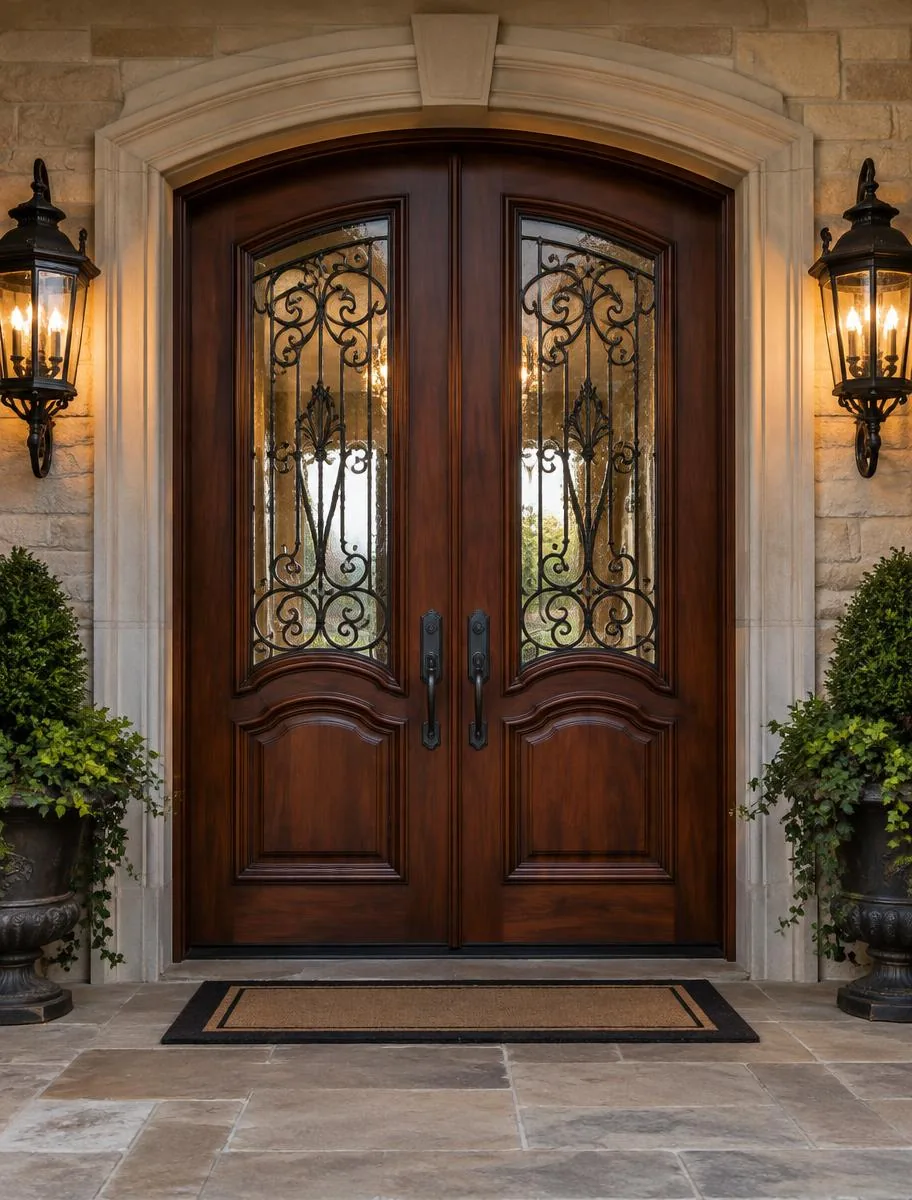
The phrase can describe different assemblies, including decorative ironwork associated with glazing rather than a slab made entirely from iron. Before comparing options, ask what the slab and frame are made from, where the iron element sits and how the glass is retained. A photograph of a scroll pattern cannot answer those construction questions or establish the weight of the finished entrance.
Door Depot’s catalogue includes wrought-iron door designs. Treat the design name as a starting point for discussing the actual assembly, not as a specification for metal thickness, insulation or operation. Request a drawing or clear description of the proposed configuration. Establish whether cleaning or servicing any component requires access that should be planned before the door is built.
Choose a pattern that belongs with the façade
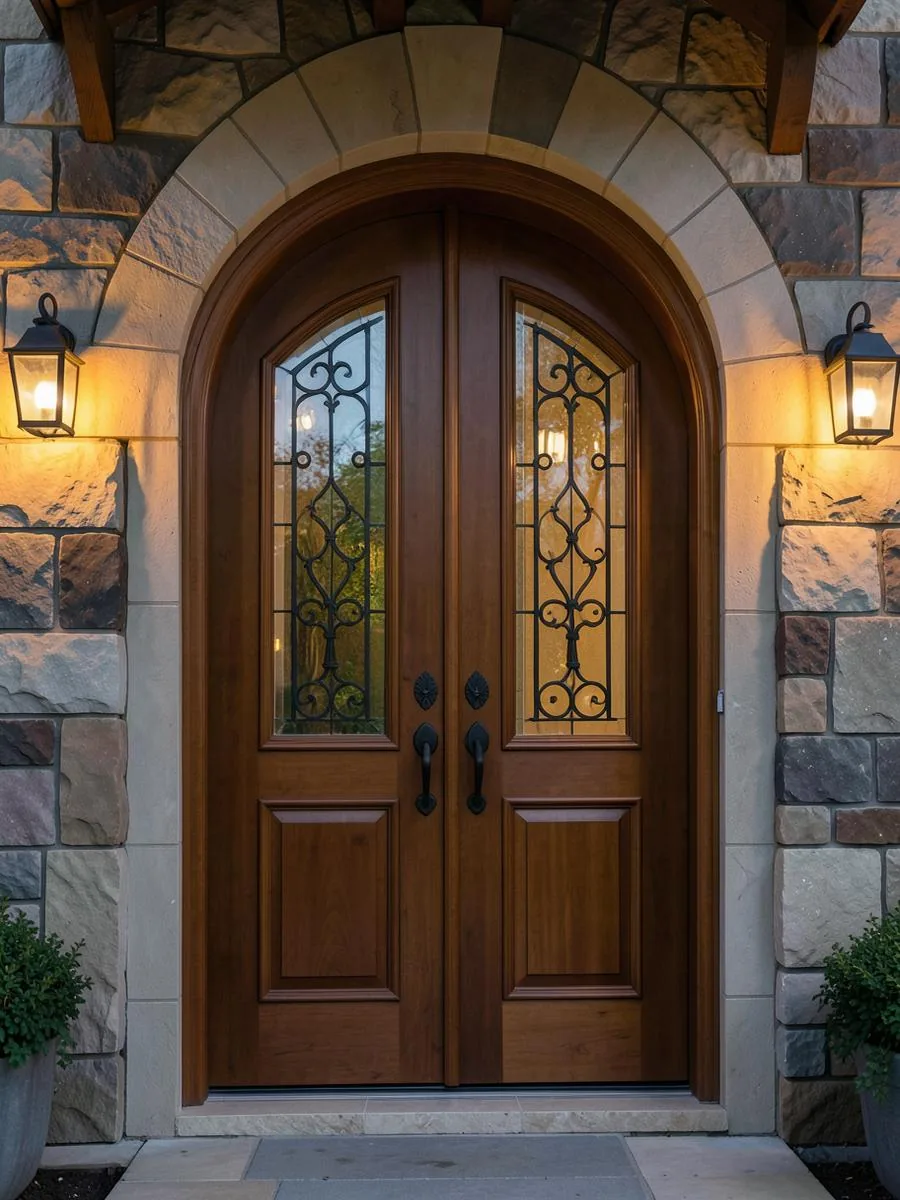
Start with the lines already present in your house. Arched masonry, curved railings and traditional trim may support scrolling designs, while strong horizontal joints and simpler openings may call for a more restrained arrangement. Compare the iron pattern from the street, not only at arm’s length. Dense ornament can look quite different once the door is seen within the whole façade.
Catalogue names include ALEXANDRIA, JULIETTA, MILANO, MANHATTAN, GARDEN LATTICE and GARDEN SCROLL. Use the printed illustrations to compare them rather than inferring a pattern or construction from the name. Ask how a chosen design will be proportioned within your slab, sidelites or paired entrance, and whether the final drawing differs from the catalogue example in any important way.
Evaluate ironwork and glass as separate decisions
Ironwork can interrupt sightlines, but open spaces within a pattern may still allow a direct view indoors. Assess the glass behind or around the pattern independently. A decorative design does not establish a privacy level, and a photograph taken with a dark interior can conceal how transparent the assembly appears when the hall is illuminated after sunset.
Compare samples with a person standing behind them at realistic distances. Look for clear areas near eye level and check the view through sidelites as well as the moving door. Ask for the glazing specification of the proposed configuration, including any available performance information. Do not assume the iron pattern itself provides a thermal benefit or a particular resistance to forced entry.
Plan daily operation before adding visual weight
A substantial-looking entrance should still be comfortable to use. Discuss slab dimensions, hinges, handle position and the threshold with the person specifying the assembly. If there are two leaves, identify the everyday active leaf and how the other opens. The usable passage when only one leaf is open may matter more in daily life than the overall width shown in a photograph.
Test an appropriate display where possible and explain who will use the entrance, including anyone with reduced grip strength or mobility. Ask about the complete assembly rather than requesting heavier components as a shortcut to quality. Security depends on coordinated hardware, frame, glazing and installation; decorative metalwork does not remove the need to specify and review those elements carefully.
Clean gently and keep abrasive materials away
Begin with the care instructions for the supplied coating, metalwork and glass. Where permitted, remove loose dust with a soft cloth and use a mild cleaning solution rather than an aggressive household chemical. Rinse or wipe as directed and dry accessible surfaces. Take care around joints and glazing edges instead of directing pressurised water into the assembly.
Avoid steel wool, scraping tools and abrasive pads that could scratch the finish or leave metal fragments behind. Protect the door when nearby masonry, paint or landscaping work is taking place. If residue will not lift with the approved method, ask for advice before trying a solvent. A quick stain-removal experiment can create a larger coating repair than the original mark required.
Inspect coating damage and moisture traps
Look periodically at lower corners, intersections in the pattern and places where water or dirt tends to collect. Chips, lifting coating or rust-coloured marks deserve prompt assessment. Record photographs before touching up an area, and ask for the correct preparation and coating process. Painting over a damp or poorly prepared defect can conceal the symptom without addressing the cause.
Keep de-icing products and wet debris away from the entrance where practical, and clean accidental contamination using the approved instructions. Do not block intended drainage routes with sealant. If deterioration returns in the same place, have the joint, coating and surrounding water path reviewed. The right remedy may involve more than a cosmetic dab of paint on the visible surface.
Agree on a practical service and care record
Before ordering, collect the design name, final drawing, finish identification, glazing details and hardware specification. Ask how glass replacement, coating repair and hardware adjustment would be approached for that exact assembly. Clarify what the homeowner can clean and what should be handled by a professional. Store the answers with the order so future work does not rely on identifying parts from memory.
Inspect after winter and whenever nearby work could have damaged the finish. Check that the door latches normally and report a new scrape or unusual resistance rather than forcing it closed. Door Depot’s limited lifetime warranty covers the door slab, frame and our original workmanship, subject to the written warranty terms. Read those terms and the care instructions without assuming every decorative component has identical coverage.
Frequently asked questions
Does ironwork make clear glass private?
Not reliably. Gaps in a decorative pattern may leave direct sightlines. Assess the glass and the iron pattern together from outside, including after dark with the hall lights on.
Can I use any black paint for a small chip?
Do not assume so. The finish system, preparation and colour match matter. Photograph the damage and request the approved repair process before applying a coating that may not adhere or blend properly.
Are all wrought-iron entrances solid metal doors?
No. The term can refer to different constructions, including decorative ironwork used with glazing. Confirm the slab, frame and location of the iron element in the actual proposal.
Should I pressure-wash the pattern?
Follow the supplied instructions. High-pressure water can drive moisture into joints and affect finishes. Gentle approved cleaning is a safer starting point than treating the door like surrounding paving.
Does an iron design prove a security rating?
No. Appearance is not a rating. Ask about the complete proposed assembly, including frame, hardware and glass, and request documentation for any specific performance claim being considered.