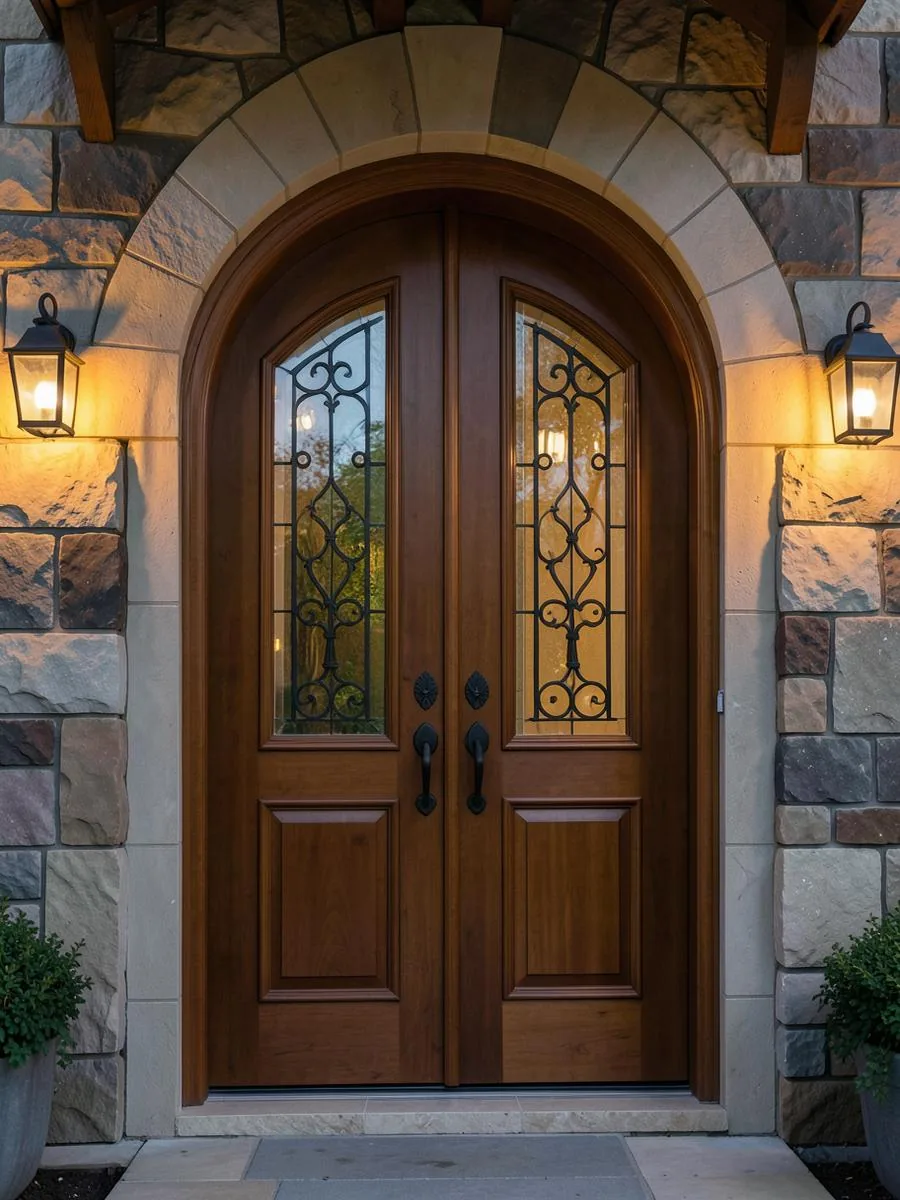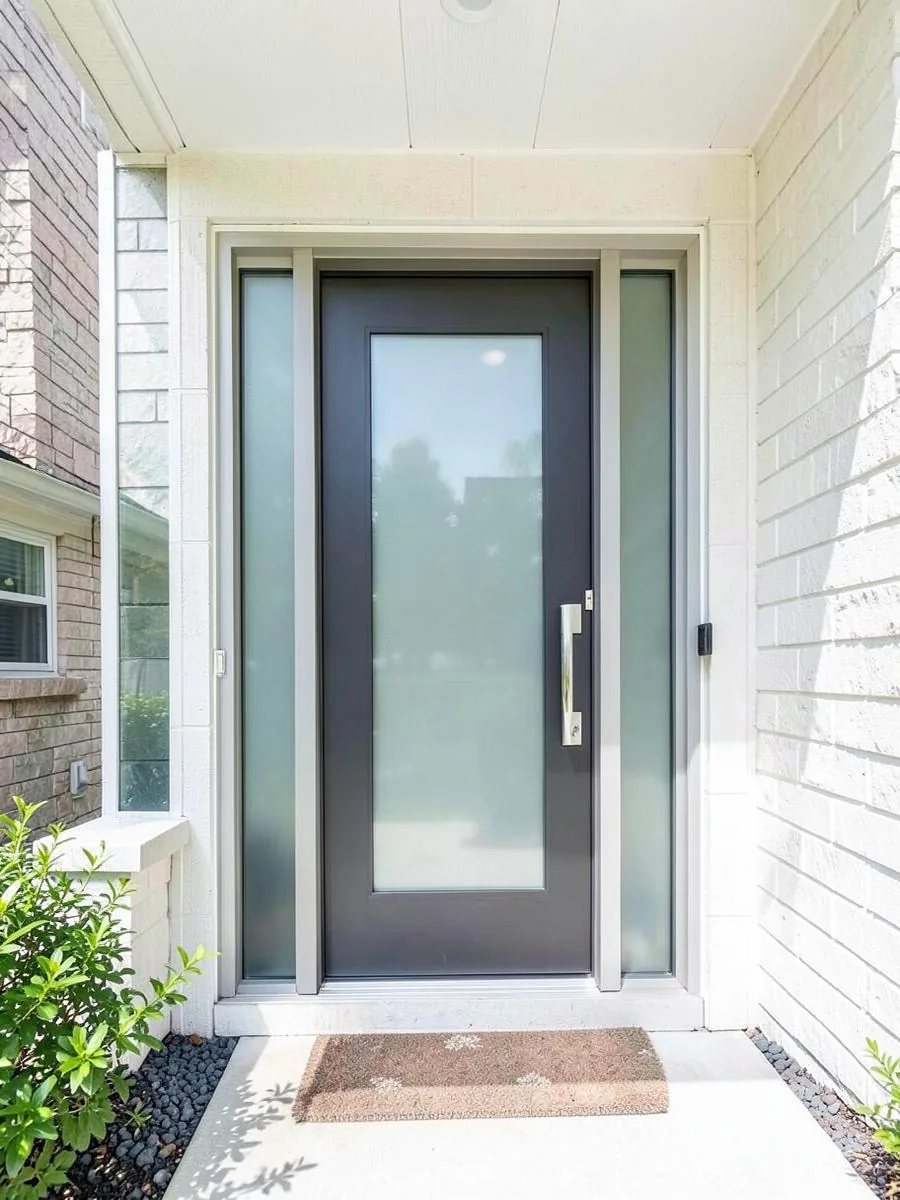

Keep the selected finish’s instructions as your primary care reference. Clean gently, inspect changes early and avoid applying oils, waxes, solvents or new coatings unless they are expressly appropriate for that surface and finish.
Identify the surface before choosing a care product
A stained appearance does not establish what the door is made from. A solid-wood slab has a different substrate from woodgrain fiberglass, even if the colour and grain look similar from the street. Confirm the material of the slab and the other finished components. The frame, trim and door may not all share the same substrate or the same care requirements.
Keep a record of the selected stain and finish system, along with the instructions supplied for cleaning and maintenance. If that information is missing, ask the installer or finish provider before applying a treatment. Products advertised for wood furniture, decks or general exterior surfaces are not automatically suitable for your entrance. The right starting question is whether a product is approved for this particular finish, not whether its label mentions wood.
Remove ordinary dirt without attacking the coating
Begin with the least aggressive method permitted by the finish instructions. Loose dust can scratch a surface if it is rubbed across the coating, so use a clean, soft material and work gently. Where the instructions allow damp cleaning, avoid soaking the entrance and dry it as directed. Pay attention to the lower portion of the door, where splashes and tracked debris often accumulate.
Do not improvise with abrasive pads, harsh cleaners or strong solvents to speed up the job. A cleaner that removes a mark can also change sheen or damage the protective finish. Follow the stated dilution and application guidance, and test only where the finish instructions permit. If a deposit will not lift with the approved approach, stop and ask for advice rather than escalating through stronger household products.
Inspect the finish in changing light and weather
Look at the surface when it is clean and dry so dirt is not mistaken for finish failure. Notice changes in colour, sheen or texture, especially on exposed edges and around hardware or glass. Sun and moisture do not reach every part of an entrance equally. A sheltered upper panel and a lower weather-facing edge may therefore tell different stories about the condition of the coating.
Use photographs to record a change instead of trying to remember whether a patch has grown. Keep the lighting and viewpoint reasonably similar and note whether the area was wet or dry. Follow the selected finish’s inspection and maintenance guidance rather than imposing a universal recoating schedule. The exposure, substrate and coating determine what attention is appropriate; a neighbour’s refinishing routine may not be relevant to your door.
Keep moisture and everyday wear in perspective
Avoid leaving wet decorations, adhesive accessories or damp fabric against the finished surface unless the finish guidance expressly permits them. These can hold moisture or alter the appearance beneath them. Take care with planters, hoses and snow-clearing activities near the entrance as well. The aim is not to keep an exterior door untouched, but to avoid unnecessary prolonged contact or abrasion that adds to normal weather exposure.
Inspect the surrounding entrance when you notice repeated wetting or staining. A coating problem and a source of unwanted water may need different responses. Do not try to solve a recurring issue simply by adding another finish layer. If the door is sticking, a seal is damaged or water appears where it should not, have the assembly assessed. Care of the visible surface is only one part of keeping an entrance serviceable.
Treat scratches and damaged patches as finish-specific repairs
A small mark can tempt you to sand, colour and cover it immediately. Resist that impulse until you know the substrate and approved repair method. Sanding woodgrain fiberglass as though it were solid wood can damage the surface, while an incompatible touch-up can leave a conspicuous patch. The original finish instructions should determine whether a local repair is appropriate and which products may be used.
Ask for advice when you see peeling, cracking, bare areas or a change you cannot identify. Photograph the whole door and the affected detail so the location and exposure are clear. Avoid promising yourself that an additional clear coat will hide the issue: coating over contamination or a failing surface may not address the cause. A repair recommendation should follow an assessment of the existing material and finish condition.
Plan refinishing from condition, not a universal calendar
There is no single maintenance interval that applies to every stained entrance. Shelter, sunlight, weather and the selected coating influence how the surface ages. Use the finish manufacturer’s instructions and the observed condition to decide when to seek refinishing advice. If the guidance calls for periodic maintenance, follow that process rather than waiting until a visibly damaged area becomes the trigger for action.
For solid wood, preparation must account for the real surface and its condition. For woodgrain fiberglass, preparation must preserve the moulded surface and remain compatible with the selected system. Neither route should be improvised from a generic furniture-restoration tutorial. If you are uncertain, ask a professional to assess the entrance before work begins. Door Depot also repairs doors, and Oscar says when a repair or refinish makes more sense than a new door.
Keep useful records and separate care from warranty questions
Store the finish instructions with the order documents and keep a brief record of cleaning products, approved repairs and any professional advice. This helps prevent a future owner or contractor from applying an incompatible treatment because the existing system is unknown. If you change the finish through an approved refinishing process, update the record rather than continuing to rely on the original product information.
Raise warranty questions directly instead of assuming a care recommendation defines coverage. Door Depot’s limited lifetime warranty covers the door slab, frame and our original workmanship, subject to the written warranty terms. Read those terms and ask about a specific concern before undertaking work that may complicate assessment. General guidance in this article does not replace the selected finish’s instructions or establish additional warranty conditions for an individual entrance.
Frequently asked questions
Can I use furniture polish on a stained door?
Only if the selected finish’s instructions expressly permit it. Oils, waxes and polishes may be unsuitable or complicate later work. Confirm the finish system before applying a product intended for another use.
Does woodgrain fiberglass need care?
Yes. The stained appearance relies on a finish that still needs appropriate cleaning and inspection. Follow its instructions and avoid assuming that a fiberglass substrate makes the coating maintenance-free.
How often should a stained door be refinished?
Use the selected finish’s guidance and the condition of the entrance. Exposure and coating systems vary, so a single interval would be misleading. Seek advice when you notice deterioration rather than waiting for widespread damage.
Can I pressure-wash the door?
Do not assume pressure washing is suitable. Follow the finish and door care instructions, which should guide both cleaning method and products. A more aggressive approach can harm surfaces or force water into unwanted places.
What should I do about a pale or peeling patch?
Record it with photographs and ask for an assessment. Avoid sanding or recoating before identifying the substrate, the existing finish and the cause. An approved repair method is safer than a guessed cosmetic fix.